
Dog Body Language
a resource & guide to navigate and support you in your journey with your reactive dog
Understanding Dog Reactivity: Why It Happens & How to Help Your Dog Cope
Reactivity can be one of the most challenging behaviors to deal with as a dog owner, but it doesn’t have to define your life together. With awareness, structure, and empathy, you can help your dog learn to navigate the world more calmly and confidently.
What Is Reactivity?
In dog training, reactivity refers to when a dog becomes overstimulated or over-aroused by something in their environment. This might look like barking, lunging, growling, or freezing in response to triggers such as:
Other dogs
Loud noises
Crowds or strangers
Being on leash
Small children
Looking out the window or being confined
Essentially, reactivity happens when your dog "blows up" over something that shouldn’t normally cause that level of response.
Understanding the Threshold
You may hear trainers talk about a dog going “over threshold.” This simply means the dog has crossed from a manageable level of stimulation into a state of emotional overwhelm.
Our goal as trainers and owners is to keep dogs under threshold, calm enough to stay engaged and able to learn, but aware enough to gradually process their triggers. When a dog is over threshold, they are no longer capable of learning new behaviors; they’re just trying to cope.
If you’ve ever been told to “just calm down” while you were anxious or overstimulated, you know that logic doesn’t work in those moments. The same goes for our dogs. They don’t need more commands; they need support, space, safety, and guidance.
Managing vs. Training
When your dog goes over threshold, it’s time to move into management mode, not training mode. Management might mean increasing distance from the trigger, turning away, or calmly walking in the opposite direction. This helps your dog return to a state where they can think and listen again.
Once your dog is regulated, you can begin training new responses. For example:
Teaching your dog to move away from triggers instead of toward them
Creating distance and rewarding calm behavior
Gradually reintroducing triggers in a controlled way
Engage with your dog around their triggers to make you the most important thing in the environment
Avoidance shouldn’t be the long-term goal, but while you’re building your dog’s confidence and coping skills, be their advocate.
Building Positive Associations
To help your dog build resilience, create positive experiences around their triggers. You can start small, such as:
Standing outside a dog park and playing a favorite game with your dog
Visiting a busy park but staying on the quiet outer edge
Allowing your dog to sniff and explore at a comfortable distance
Every time your dog chooses not to react, that’s a huge win. Reward them for disengaging. Over time, your dog learns that moving away from a trigger leads to relief and calm, giving them both agency and confidence.
Recognizing the Signs
Before a full-blown reaction happens, your dog will often show subtle signals that they’re approaching their threshold. In the next section, we’ll look at some of the common signs that your dog is becoming stressed or overstimulated, so you can step in early and help them succeed.
Subtle stress signals (early signs)
Lip licking or panting when not hot or tired
Yawning when not tired
Turning the head or body away from a person or situation
"Whale eye," where the whites of the eyes are visible
Sniffing the ground or shifting weight
Freezing or becoming stiff
Slow, stiff, or tucked-under tail wags
This is the preventative stage where there’s an opportunity here to move them through the emotion and away from the trigger as opposed to building it up. Early signals are warning signs so pay close attention to your dog, the environment it’s in, and create your strategy.
Over reactions (escalated signs)
Barking or growling
Intense staring or hyper-focus on a trigger
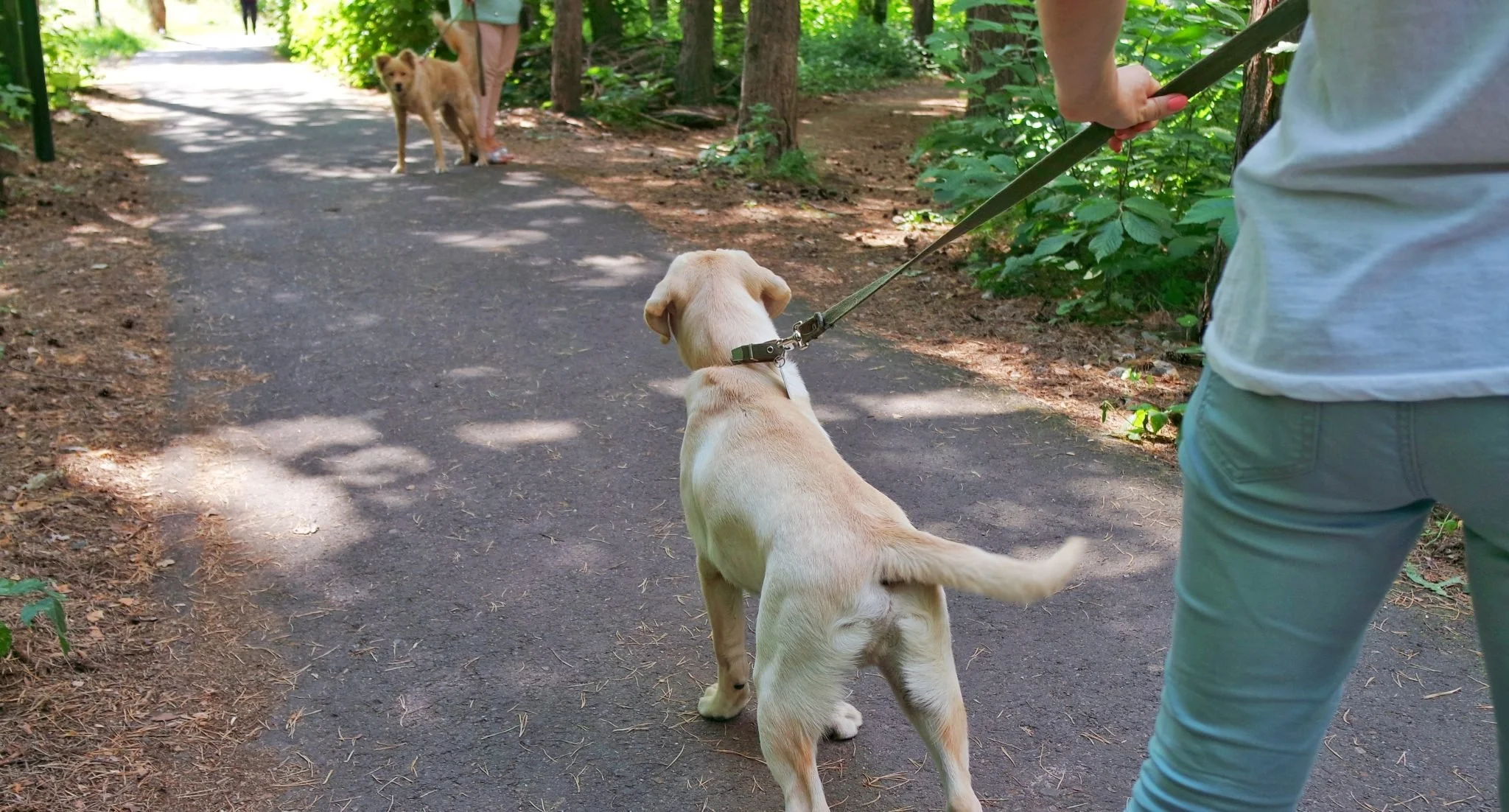
Lunging, jumping, or pulling on the leash
Spinning in circles
Snapping or baring teeth
Frantic bouncing or trying to escape
Trying to hide behind you or jump into your arms
Pinned or rigid ears
Hackles raised (fur on neck/back standing up)
Restlessness or inability to focus
This is the “red” zone for dogs. They’ve gone past their threshold to cope in the situation and their nervous system goes into fight, flight, or freeze. Since dogs can’t learn when they’re over threshold, redirect your focus from training to management by creating space between your dog and the trigger.